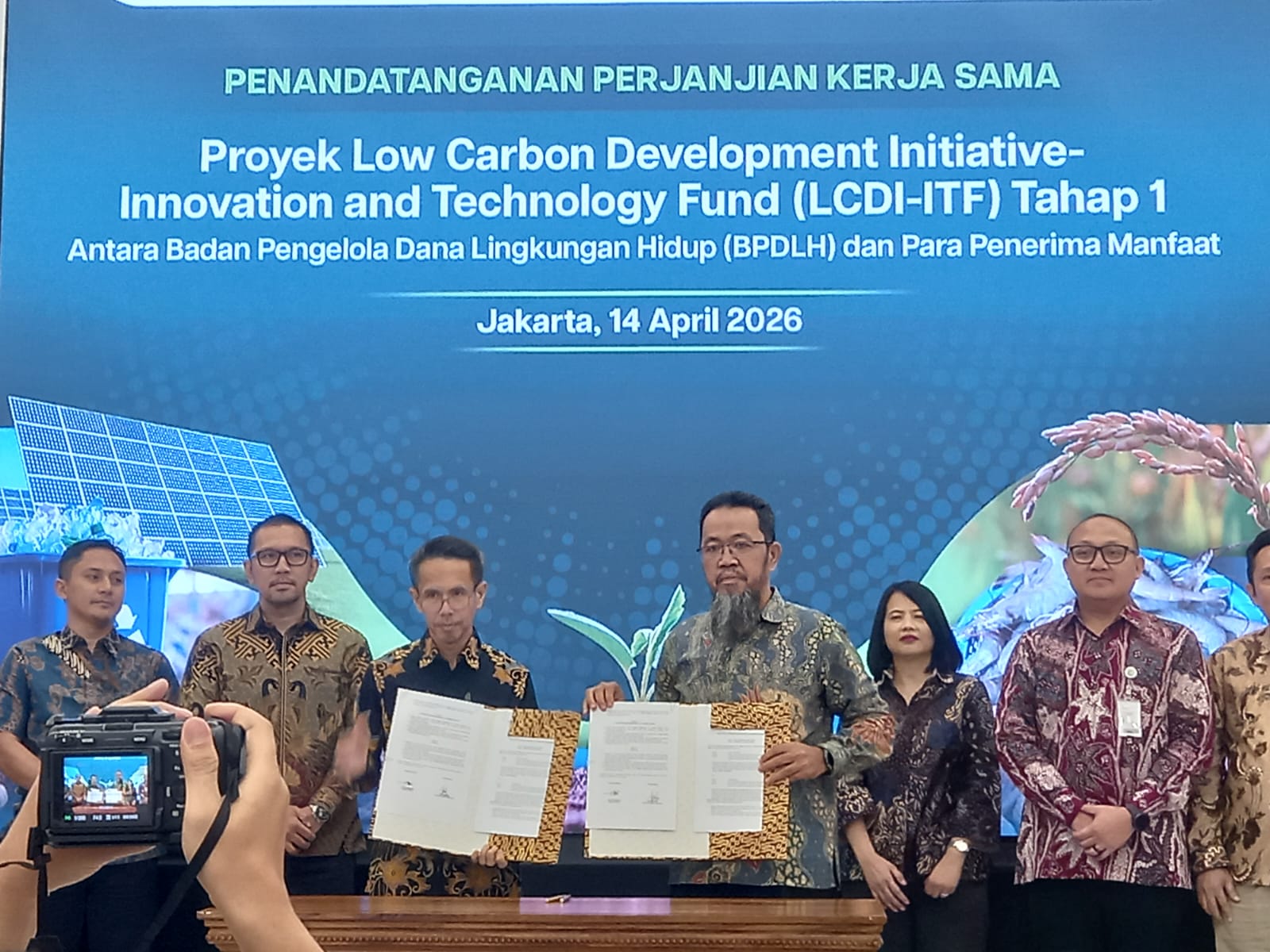
After being designated as a beneficiary of the Low Carbon Development Initiative-Innovation and Technology Fund (LCDI-ITF) Grant Project last March, the Faculty of Animal Science, Hasanuddin University (Fapet Unhas), has officially signed a cooperation agreement with the Environmental Fund Management Agency (BPDLH). The signing took place in Jakarta on Monday (April 14, 2026), as part of a series of activities for the LCDI-ITF Phase 1 Project.
This event marked the start of the implementation of the innovative project entitled “Integrated Waste Management Technology using Maggot and Alope Unhas-1 Chicken to Support a Circular Economy in South Sulawesi.” The project, located at the Unhas Tamalanrea Campus in Makassar, received funding from the BPDLH through the LCDI-ITF scheme, which focuses on the waste sector.
With the signing of the agreement, Fapet Unhas can officially realize its biological technology integration program, namely the cultivation of maggots (black soldier fly larvae) and the utilization of Alope Unhas-1 Chickens, as a solution for organic waste management. The main goal is to reduce the volume of waste ending up in landfills (TPA) while creating economic value through derivative products such as animal protein and compost.
“This signing demonstrates our commitment to immediate action. After being designated as a beneficiary last March, we are now legally ready to implement the project. We thank the Environmental Impact Management Agency (BPDLH) for their trust. The Faculty of Animal Husbandry, Hasanuddin University, will work hard to demonstrate that livestock-based solutions can be the answer to environmental challenges, particularly in eastern Indonesia,” said the Dean of the Faculty of Animal Husbandry, Prof. Dr. Ir. Syahdar Baba, S.Pt., M.Sc., IPU., who also serves as Team Leader. With the signing of this cooperation agreement, the project is expected to immediately provide direct benefits to the community and environment in South Sulawesi and become a model for a circular economy based on livestock research.