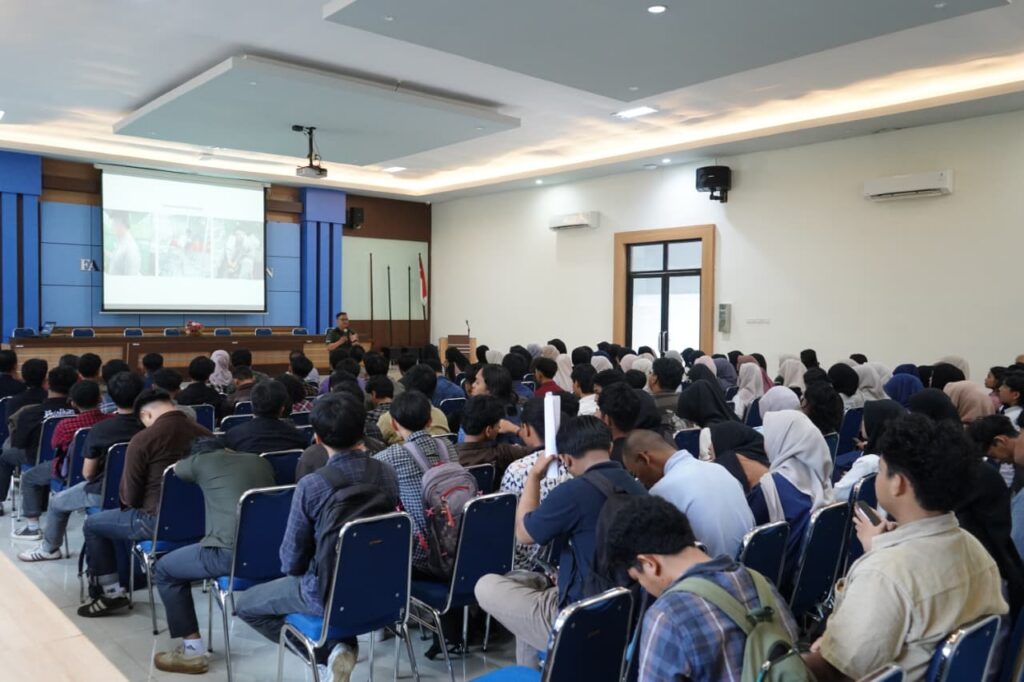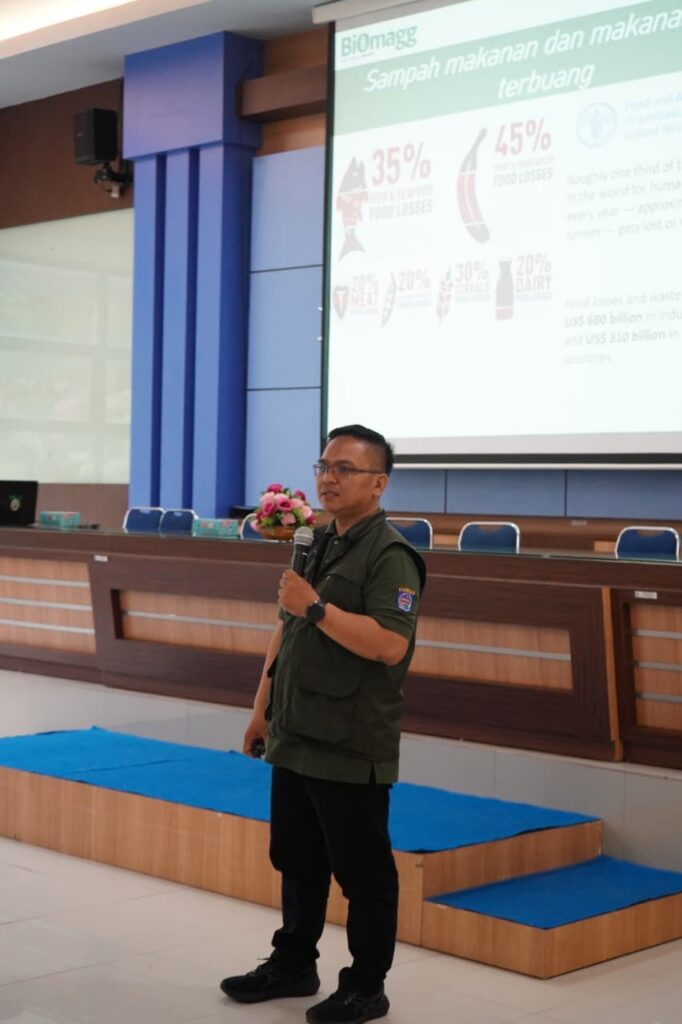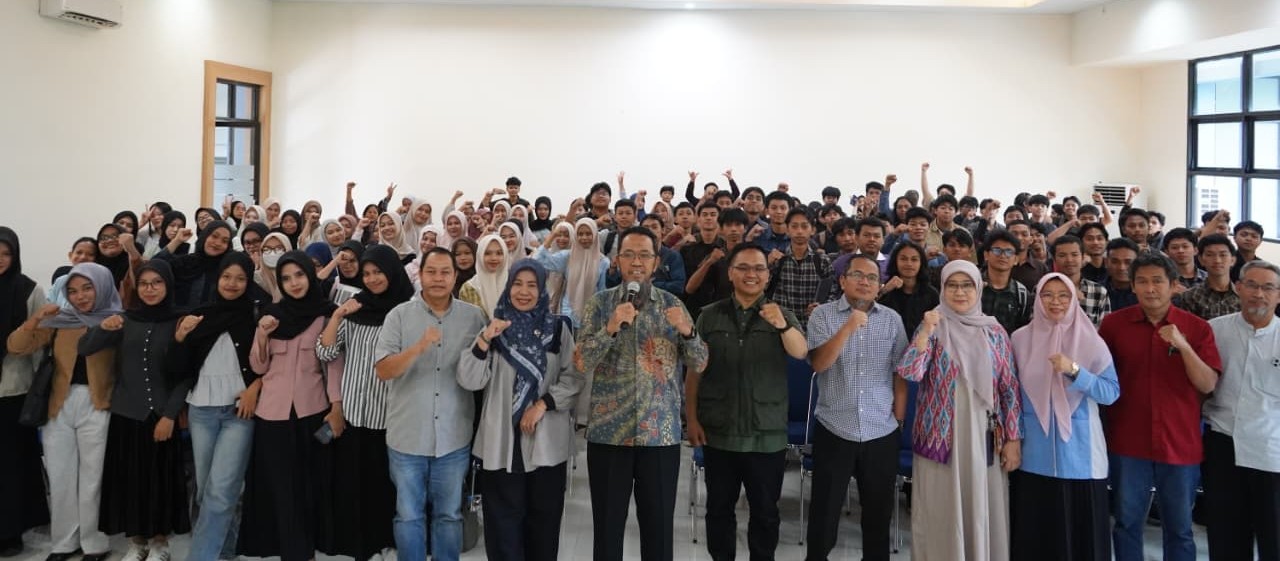
The Faculty of Animal Science, Hasanuddin University (Fapet Unhas) once again demonstrated its commitment to developing environmentally-driven young entrepreneurs through a public lecture titled “When Waste Brings Blessings, From Trash to Cash.” The event, held in the Faculty Hall on Wednesday, April 29, 2026, was attended by enthusiastic students eager to explore how organic waste can be transformed into economically valuable products.
The speaker was Mr. Aminudi, CEO of Biomagg, a startup and provider of industrial-scale organic waste processing solutions using Black Soldier Fly (BSF) larvae (maggots), bioconversion technology. Aminudi began his presentation by sharing his inspiring experiences in pioneering his business. Starting his business on a small scale with limited capital, Aminudi never imagined that his perseverance in cultivating Black Soldier Fly (BSF) would lead him to national recognition. He won first place in the Independent Young Entrepreneur competition and took home a prize of Rp1 billion.
“Just 100 grams of maggot is enough to process up to 1 ton of organic waste. This isn’t just a number; it’s a leap in efficiency we never imagined. Waste that usually piles up in landfills for months can be depleted in a short time by tiny creatures called maggots,” said Aminudi, revealing surprising facts about maggot efficiency.
Furthermore, Aminudi explained that the bioconversion process he introduced not only decomposes waste but also produces various economically valuable products, such as Maggot Meal (maggot flour as protein-rich animal feed), Maggot Oil (maggot oil for various industrial uses), Wound Medicine (a proven wound medicine), Natural Soap, Aromatherapy, and Liquid Soap.
This public lecture wasn’t just about business; it also aligned with the commitment of the Global Sustainable Development Goals (SDGs), specifically point 12: Responsible Consumption and Production. By converting organic waste into value-added products, the waste chain is replaced by a sustainable and circular economy. Waste that previously ended up in landfills (TPA) and produced methane gas (a contributor to the greenhouse effect) is now being processed into industrial raw materials. This activity is also part of the LCDI-ITF (Low Carbon Development Initiative-Innovation and Technology Fund) grant program, featuring experts from relevant industries.
This public lecture demonstrates that the Faculty of Animal Science, Hasanuddin University, continues to advance not only in conventional animal husbandry science but also in a circular economy based on agriculture and the environment. It is hoped that more students and young people will be inspired to become entrepreneurs in the circular economy sector and participate in solving the national waste problem.
The public lecture was attended by the Dean of the Faculty of Animal Husbandry, Hasanuddin University, Prof. Dr. Ir. Syahdar Baba, S.Pt., M.Si., IPU, who officially opened the event, and the Vice Dean for Student Affairs, Alumni, and Partnerships, Prof. Dr. Muhammad Ihsan A. Dagong, S.Pt., M.Si. In his remarks, Prof. Syahdar emphasized that this program demonstrates the Faculty of Animal Husbandry’s commitment to providing solutions for managing Makassar’s urban waste and demonstrates that the issue of organic waste management through bioconversion technology is no longer just talk but has become a real movement on campus. He also stated that the public lecture will be followed by other programs, such as workshops on maggot utilization and pilot projects for local farmers. This public lecture successfully demonstrated that waste, considered a problem and ending up in landfills (TPA), is actually the starting point for a business that has economic value, protects the environment, and builds a more sustainable future.